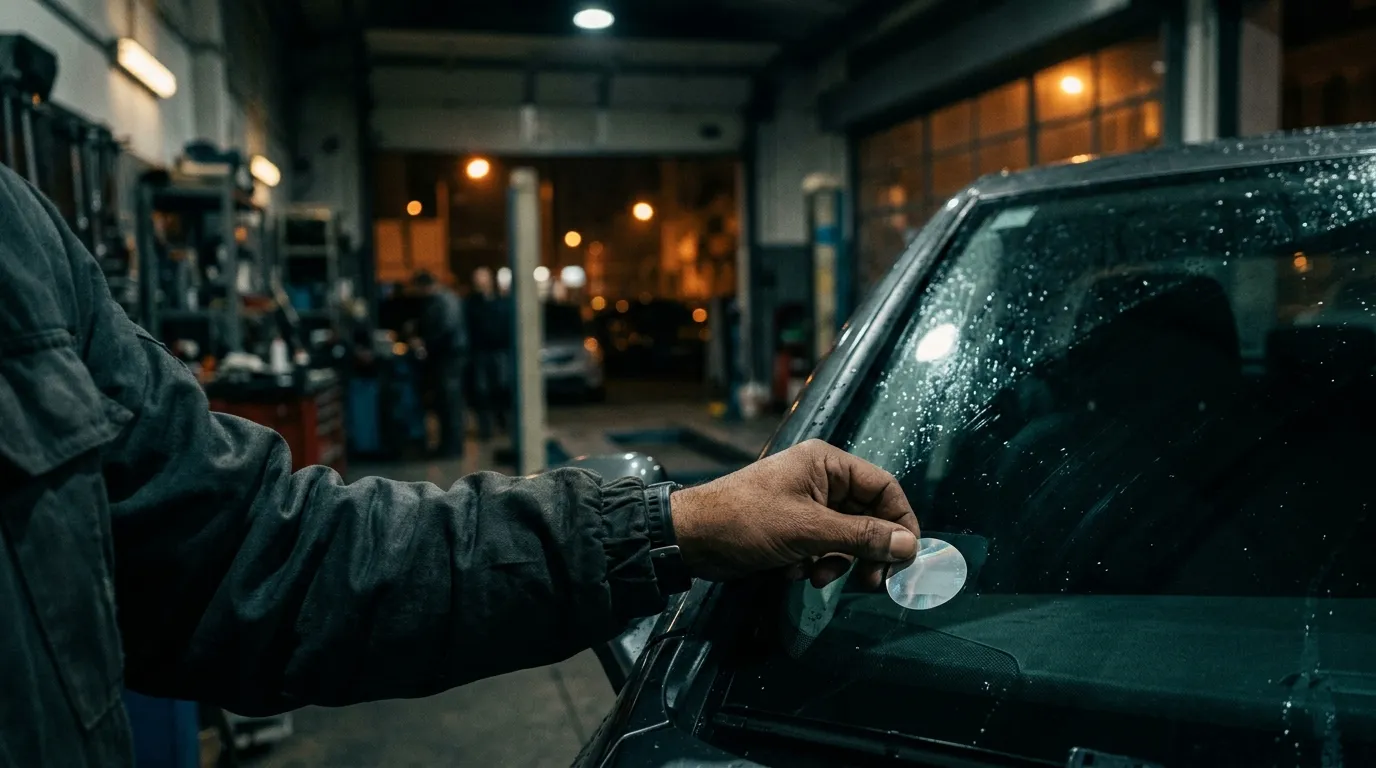
Vehicles: age, badge, advertising and video recording
TVDE cars gain more years of service life, a tamper-proof badge and the possibility of carrying advertising. The big novelty is optional video recording, with strict rules on consent and access to the images.
Older vehicles, a more secure badge
The maximum age of vehicles used for the activity rises from 7 to 10 years, and reaches 12 years for electric vehicles. It is a significant margin for operators and drivers, who can now keep cars profitable for longer. In return, the law tightens vehicle identification: the identifying badge becomes tamper-proof, issued by the IMT and permanently associated with the vehicle, with anti-fraud security features such as holograms or equivalent technology. The technical specifications and the fees are left to a government order (portaria).
As for the vehicle requirements, the logic of passenger cars remains. According to the available information, a Portuguese number plate and a maximum capacity of 9 seats including the driver are required, and tuk-tuks remain excluded; because these points rest on a single source, they should be read with caution. The prohibition of free-of-charge loan (comodato) and usufruct contracts for assigning vehicles, confirmed by several sources, is dealt with in detail further below, as it is one of the changes with the greatest practical consequences.
Advertising is no longer prohibited
Another relevant change is the end of the ban on advertising on vehicles, both inside and outside, bringing the TVDE regime into line with that for taxis. The law allows it under the terms provided for taxis (article 12(11)), so the limits and conditions for placement are those of the taxi regime.
what changes for vehicles
topic
2018 law
new law
maximum age
7 years
10 years, 12 if electric
identifying badge
without reinforced anti-fraud features
tamper-proof, issued by the IMT, with anti-fraud security
advertising on vehicles
prohibited
allowed, under the taxi regime
interior video recording
not regulated
optional, with dual consent and no sound
capacity
passenger cars
up to 9 seats including the driver, Portuguese number plate
Video recording: the most sensitive novelty
The law now allows optional video recording inside vehicles, a proposal from Chega, but surrounds it with strong privacy safeguards. Recording is only possible with the express consent of the driver and the passenger, a dual consent that must exist before any capture. The capture of sound is prohibited: only image is allowed.
The images have a maximum retention period of 30 days, with automatic deletion, and are encrypted and inaccessible to the platform manager, the operator, the driver and the user. Only judicial, police or administrative authorities may access the images, and only in incidents relating to physical integrity, personal freedom, property or road safety. Using the images for labour monitoring, performance evaluation, price setting or advertising is expressly prohibited.
On the passenger side, the right to refuse is clear: they may refuse recording without a price surcharge or penalty, unless there is no alternative vehicle available at the time, and they may cancel without penalty if they do not accept the video recording. The diagram below summarises how consent works and who can, in the end, access the images.
flowchart TD
  A[optional interior video recording] --> B{express consent of the driver}
  B -->|no| X[no recording]
  B -->|yes| C{express consent of the passenger}
  C -->|refuses| D[trip without recording, no penalty or surcharge]
  C -->|accepts| E[image recording without sound]
  E --> F[encrypted images, kept up to 30 days]
  F --> G[access only by judicial, police or administrative authorities]
consent flow and access to video recording images
Cars in third parties' names: the end of the free loan
One of the changes with the greatest real impact on the ground is the one targeting vehicles assigned to the activity through comodato (free-of-charge loan) or usufruct contracts, that is, cars lent by third parties, often registered in the names of people who have nothing to do with whoever drives. The new law prohibits entering into such contracts to assign vehicles to TVDE (article 12(16)). The only exception is a comodato between the driver who owns the car and the operator, with the car driven exclusively by that driver and registered with the IMT and on the platform (article 12(17) to (19)). Otherwise, vehicles must belong to the operating companies or be under a formal leasing or rental arrangement.
This point addresses a known problem in the sector: informal "slot" schemes and rented accounts, in which a driver works with someone else's car or account, sometimes without valid documentation, without adequate insurance and without any trail for the authorities. Driver associations have been warning for years about the fraudulent use of accounts and cars on the platforms. The ban on the free loan does not act alone: it combines with the tamper-proof anti-fraud badge, the IMT national data platform (which cross-checks operators, drivers, vehicles, insurance, inspections and licences) and fines of up to 44,000 euros for companies, forming a net around the "borrowed" car and someone else's account.
It is important to separate the situations. Working with your own vehicle registered with an operator remains possible; what the law cuts off is the assignment of cars through free-of-charge loan (comodato) or usufruct from third parties. And driving with another driver's account was never legal: it is a fraud that involves the liability of the person, of the account holder and, depending on the case, of the operator. Anyone in one of these situations should regularise it now: the new law has been in force since 1 September 2026 and the capacity for cross-checked enforcement increases substantially.
I drive a car registered in a friend's name, lent free of charge. Can I carry on?
not allowed
No, under the new law. Assigning vehicles through comodato (free-of-charge loan) or usufruct is prohibited (article 12(16)). The only exception is a comodato between the driver who owns the car and the operator, with exclusive driving by that driver and registration with the IMT and on the platform (article 12(17) to (19)). A friend's car does not fit it. See the scenarios inown car.
I work with another driver's account and split the earnings with him. Is this legal?
not allowed
No, and it was not before. Driving with someone else's account and certification is fraud, with liability for the driver and for the account holder. With the anti-fraud badge and the IMT data platform, the cross-check between driver, vehicle, insurance and licence becomes direct, and the risk of detection rises sharply.
I use my own car, registered with the operator I work with. Does anything change?
allowed
You can carry on. The model of the driver's own vehicle, registered with the operator and meeting the requirements (age, insurance, inspection, badge), is not the target of the ban. What the law cuts off are informal assignments of third parties' cars through comodato or usufruct.
Vehicles now need their own registration with the IMT
Until now it was enough for the vehicle to be listed on the platform by the operator. More is now required: only vehicles registered with the IMT and listed by operators on an electronic platform may be used in the activity, and the platform manager must certify compliance with the applicable legal and regulatory requirements.
A number is issued with the registration, and it is that number which appears on the identifying badge fixed to the vehicle. The registration is valid for five years, renewable for equal periods, but with a limit: it can never run longer than the licence of the TVDE operator the vehicle is assigned to. If the operator's licence expires first, the vehicle registration expires with it.
what you can do
assign to the activity a vehicle up to 10 years old, or 12 years if electric
place advertising inside and outside, under the terms provided for taxis (article 12(11))
activate video recording only with the express consent of the driver and the passenger
as a passenger, refuse recording without a price surcharge or penalty
what you cannot do
use a vehicle above the maximum age, or remove the tamper-proof badge issued by the IMT
assign to the activity a car lent by third parties through comodato or usufruct; the only exception is a comodato between the owner-driver and the operator (article 12(17) to (19))
record sound inside the vehicle under any circumstances
use the images for labour monitoring, performance evaluation, price setting or advertising
give access to the images to the operator, the driver, the platform or the user; only authorities may access them
Practical cases
My car is 8 years old. Can I keep using it for TVDE?
allowed
Yes. The new maximum age is 10 years, so a vehicle that is 8 years old meets the requirement. The new limit has applied since 1 September 2026, when the law came into force; before that the limit was 7 years.
I have an 11-year-old electric car. Is it still suitable for the activity?
allowed
Yes. For electric vehicles the maximum age rises to 12 years, so an 11-year-old electric car is within the limit. A combustion vehicle of the same age would no longer meet the maximum of 10 years.
I want to place advertising on the outside of my TVDE vehicle. Is it allowed?
it depends
It depends on complying with the taxi rules. The ban on advertising ends, both inside and outside, and the law allows it under the terms provided for taxis (article 12(11)). The limits and placement conditions are those of that regime.
Can I also record sound inside the car, for my safety?
not allowed
No. Video recording allows image only. The capture of sound is expressly prohibited, even with the consent of the parties, and even in the name of the driver's safety.
Regulation still pending
Law no. 59/2026 has been in force since 1 September 2026. The model, the specifications and the fee of the new badge still depend on a government order (portaria), which has not been published. See what is still to be regulated in government orders still to be published.
Spotted an error? Want to advertise or partner with us?
This is now the reference site in Portugal on the new TVDE law. In little over a month, with content written from the text published in the official gazette and available in eight languages, the numbers speak for themselves. People really do need to know what is changing.
+24 000appearances in search results
21searches in the top positions
22%click rate on the main searches
8languages
If you have spotted an inaccuracy, want to advertise, propose a partnership or talk to us about anything else, write to geral@leitvde.pt.